
A friend of mine in Jumeirah spent an afternoon last summer standing in her flooded kitchen, holding a plastic folder full of pulpy paper that used to be her tenancy contract, her Emirates ID copies and her son’s school records. The building’s water tank had burst two floors above. Everything electronic she could re-download. The paperwork with the wet stamps and the original signatures took her almost three months to rebuild. When I asked what she wished she had done differently, she didn’t hesitate: bought a proper home safe five years earlier and stopped treating a shoebox in the wardrobe like a security plan.
Most people in the UAE think about a safe only after something goes wrong: a break-in at a neighbour’s villa, a leak, a lost passport at the airport, a piece of gold that gets misplaced in a house move. By then, the choice is rushed. This guide is meant to be the opposite: a calm walk through what actually matters when you pick a home safebox that fits the specific things you plan to keep inside it.
Start here
First decide what goes inside
The single biggest mistake buyers make is shopping by price or by size before they list the contents. A safe built for cash and a USB drive is not the same object as a safe built for a passport folder, and neither is the same as one built for a jewellery collection. Sit down for ten minutes and write out what you actually own that needs protection: original documents, gold and diamonds, spare cash in dirhams and foreign currency, hard drives with family photos, watches, spare car keys, medication.
Once the list exists, three questions answer themselves. How much volume do you need? What is the worst thing that could happen to these items: theft, fire, water, or all three? And how often will you open the safe? A safe you open twice a year can live behind a heavy wardrobe. A safe you open twice a week needs to be somewhere convenient, and the lock has to match that frequency.
Jewellery, documents and cash want different things
Once you separate the contents, the specifications start pointing in different directions. Jewellery safes are usually designed with the interior in mind: soft velvet or microfibre linings, pull-out drawers with individual compartments, ring rolls, hooks for necklaces so chains do not knot. That matters more than it sounds. Piling rings, earrings, bracelets and pendants together in one steel box scratches stones and tangles fine chains, so the safe protects your gold from thieves and slowly damages it at the same time.
Documents care about something else entirely. A passport, a title deed, a marriage certificate or a set of company papers can survive most burglaries, thieves rarely want them, but they will not survive a fire or a burst pipe. For paper, a small safe is often enough, sized around A4, but it has to be certified fire-resistant, and ideally water-resistant too. Look for a documented fire rating with a time and temperature: 30, 60 or 120 minutes at a stated internal temperature that stays low enough to keep paper intact. According to the general classification of safes fire and burglary ratings are certified separately, so a fireproof box is not automatically burglar-resistant, and the other way around.
Cash, watches and small electronics are the classic burglary targets, and this is where the burglary rating on the label matters most. Independent European grades (Euro Grade 0 through VI) tell you roughly what value of contents the safe is rated to protect and how much resistance it offers against attack tools. For a normal UAE household with jewellery and some cash, a Grade 0 or Grade I safe is often the practical sweet spot: heavy enough that it is not walked out of the flat, rated enough that insurers will usually recognise it.
The lock is where most compromises hide
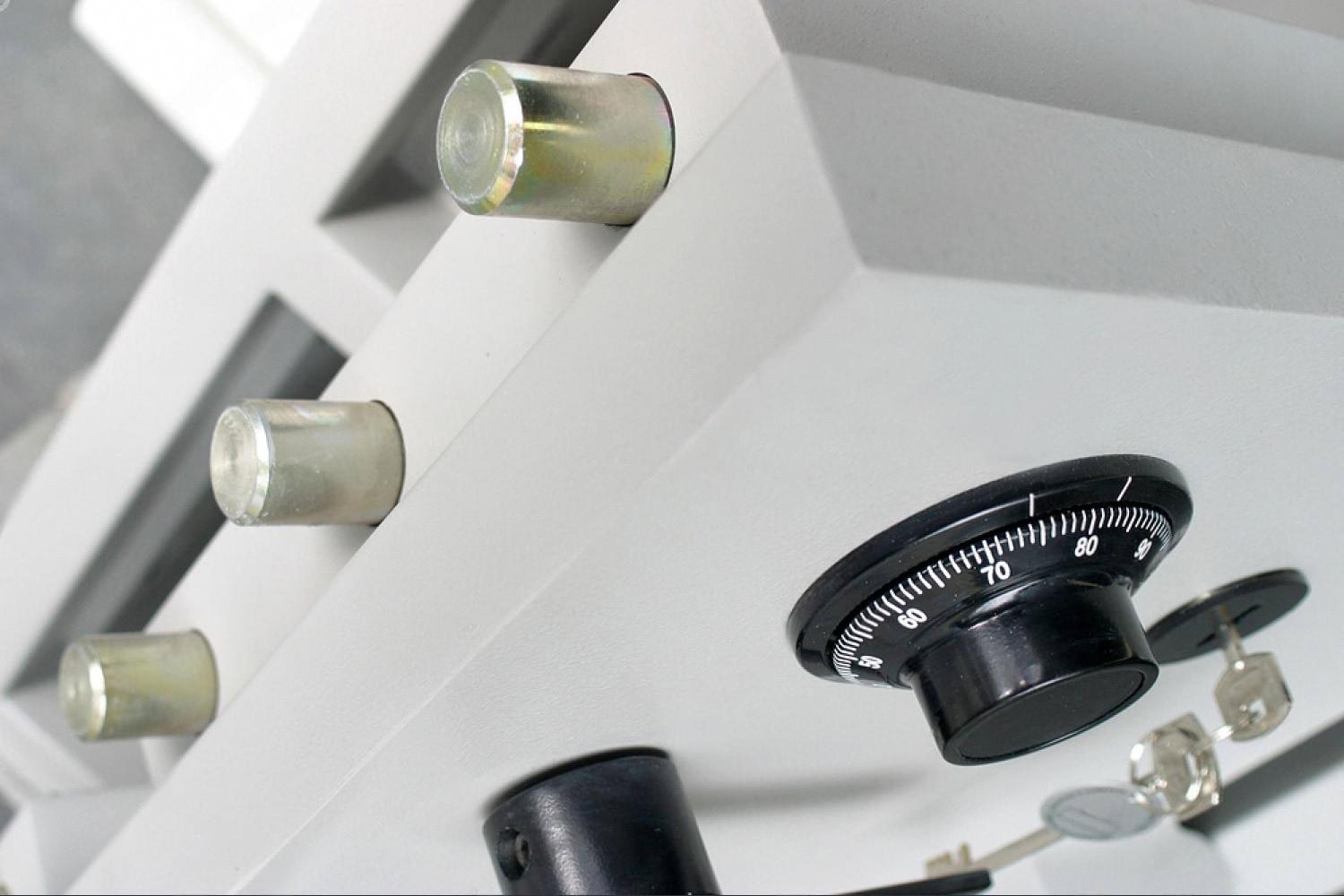
Every safe manufacturer will tell you their body is strong. What separates a serious model from a display piece is what happens at the door. Look for reinforced boltwork on multiple sides, not just the hinge edge. Look for a relocker, an internal mechanism that jams the bolts if someone tries to punch the lock out. Look for anti-drill plates behind the keypad.
The lock itself is a personal choice, but the safest approach for a home is a combination lock. Many quality safes now offer dual authentication: a PIN code together with a physical key, or a biometric fingerprint reader backed up by a code. Two independent factors mean a stolen key or a shoulder-surfed code alone is not enough to open the door. If you go biometric, always keep the backup key and the master code somewhere separate, ideally with a trusted family member or in a bank deposit box.
Practical rules before you buy
Match size to contents plus 30%
Measure the largest item you plan to store, usually a document folder or a laptop, and add roughly a third for growth. People always accumulate more paperwork than they expect, especially after a property purchase or a new baby in the family.
Insist on both fire and burglary ratings
A safe without a stated fire rating is a metal box. A safe without a burglary rating is a filing cabinet. For a UAE home, aim for at least 60 minutes of fire protection and a recognised burglary grade appropriate to the value inside.
Bolt it down
A safe under 100 kg that is not anchored can be carried out of an apartment in under ten minutes. Almost every quality model comes with pre-drilled holes in the base and back. Use them, into concrete if possible, and use proper masonry anchors.
Plan the location before the purchase
Ground floor, out of sight from windows, not in the master bedroom (the first place any intruder looks). A built-in wardrobe corner, a store room, or a discreet cupboard works well. Avoid bathrooms and kitchens because of humidity.
A safe is not an appliance you buy once and forget. It is a small system: the box, the lock, the anchor, and the habit of actually using it.
A few UAE-specific things people forget
- Humidity. Coastal cities like Dubai and Abu Dhabi run high humidity most of the year. Paper and gold both dislike it. Drop a couple of silica gel packs inside and replace them every six months.
- Insurance. Home contents policies in the UAE often specify a maximum unspecified cash and jewellery limit unless items are stored in a rated safe. Read the policy before you buy the safe, not after a claim. The Central Bank of the UAE also recommends holding physical copies of key financial documents separately from digital ones.
- Delivery and installation. A 60 kg safe on the twenty-third floor is a real logistics job. Confirm the seller handles delivery, positioning and anchoring, or budget for a handyman with the right drill bits.
- Spare keys. Never store the only key inside the house. A bank deposit box or a trusted relative’s home in another emirate is a better plan than a drawer three metres from the safe.
A good home safe is quietly boring. You install it once, you use it every few weeks, and for years nothing dramatic happens. That is the point. The value shows up on the one day something does go wrong: a fire in the building next door, a burglary while you are on holiday in Europe, a leak from the flat upstairs. The people who feel calm on that day are the ones who spent an hour, six months earlier, matching the safe to what was inside it.
Frequently asked questions
What size home safe do I need for a typical UAE family?
For a family with a passport folder, a couple of title documents, some jewellery and a modest cash reserve, a safe with 20 to 40 litres of internal volume is usually enough. If you also store a laptop, external drives and larger folders, aim for 50 to 80 litres.
Measure your largest item first, usually an A4 document wallet, then add roughly 30% headroom. People almost always accumulate more paperwork over time, particularly after a property purchase or a new dependant.
Is a fireproof safe also burglar-resistant?
Not automatically. Fire ratings and burglary ratings are certified separately. A pure fire safe is designed to keep the interior below a set temperature for a stated time, so paper survives, but its walls may be relatively thin.
A burglary-rated safe has thicker steel, reinforced boltwork and anti-drill protection, but may offer only limited fire resistance. Look for a model that carries both certifications if you plan to store documents together with cash or jewellery.
Should I choose a key lock, a combination, or a biometric safe?
For a home in the UAE, a digital combination lock with a mechanical key backup is the most practical default. It avoids the hassle of losing a single physical key, and lets you change the code if you suspect it has been seen.
Biometric safes are convenient for frequent access, but always pick a model that keeps a PIN and a physical key as backup. A safe that opens only by fingerprint can lock you out if the reader fails.
Where is the best place to install a home safe in an apartment?
Ground level of the flat is ideal, out of sight from the front door and windows, and away from humid rooms. A built-in wardrobe corner, a store room or a discreet cupboard are all good choices.
Avoid the master bedroom, since that is the first area intruders search. Whatever the location, bolt the safe to a concrete floor or a solid wall using the pre-drilled anchor points.
Do I really need to bolt down a home safe?
Yes, unless the safe weighs several hundred kilograms. Any safe under about 100 kg can be lifted by two people and removed from the property, then opened at leisure elsewhere. Anchoring removes that option entirely.
Almost every quality safe ships with pre-drilled holes in the base and back panel, along with anchor bolts. Use masonry fixings into concrete where possible, and let a professional install it if you are unsure.
How do I protect jewellery from damage inside a safe?
Look for a safe with a lined interior, ideally with separate drawers, ring rolls and hooks for chains. Piling rings, earrings and pendants together scratches stones and tangles fine necklaces over time.
Add a couple of silica gel sachets to control humidity, particularly in coastal cities, and replace them every six months. Store items in soft pouches if the safe interior is plain steel rather than fabric-lined.
Will my home insurance cover valuables kept in a home safe?
Most UAE home contents policies set a low limit on unspecified cash and jewellery unless the items are kept in a rated safe. Some insurers also require specific declarations for pieces above a certain value.
Read your policy wording before buying the safe, so the grade you choose matches the insurer’s requirements. Keep the safe’s certification papers and purchase invoice, they may be requested in the event of a claim.




Recent Comments